Beach house design in New Zealand for shelter and the view
The view is often what draws us to a coastal site. We stand there imagining the doors open, a long lunch, everyone drifting between the house and the sea.
It is worth returning when the weather changes.
A beach house needs to accommodate both experiences. It should let you enjoy the coast on a still morning and offer a comfortable place to retreat when the wind picks up. For beach house design in New Zealand, the relationship between outlook and shelter is one of the most useful starting points.
Where will you sit when the wind changes
A deck facing the water is an obvious place to begin. Whether it becomes the place you use most depends on its exposure.
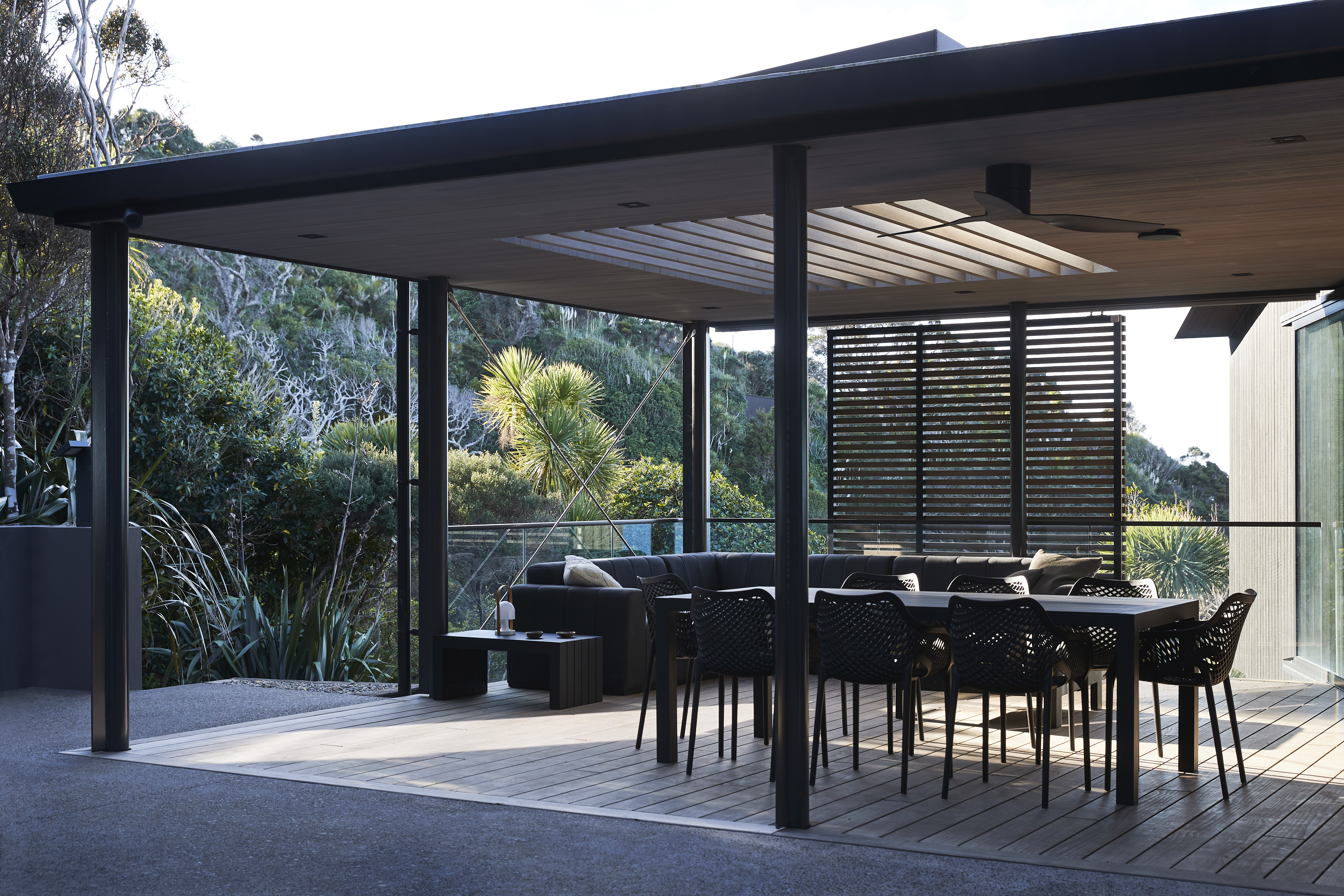
Consider where you would eat outside in a breeze, or sit with a cup of tea when the seaward side is uncomfortable. A sheltered courtyard, a recessed terrace or a garden space behind the house can give you another option.
The relationship to the kitchen matters here. If the sheltered table is a long walk away, carrying lunch outside quickly becomes a chore. Shelter works best when it is part of the everyday plan.
As an Auckland architecture practice designing coastal homes, we are interested in these small decisions because they determine how much of the house and garden people actually enjoy.
A coastal design response at Whau House
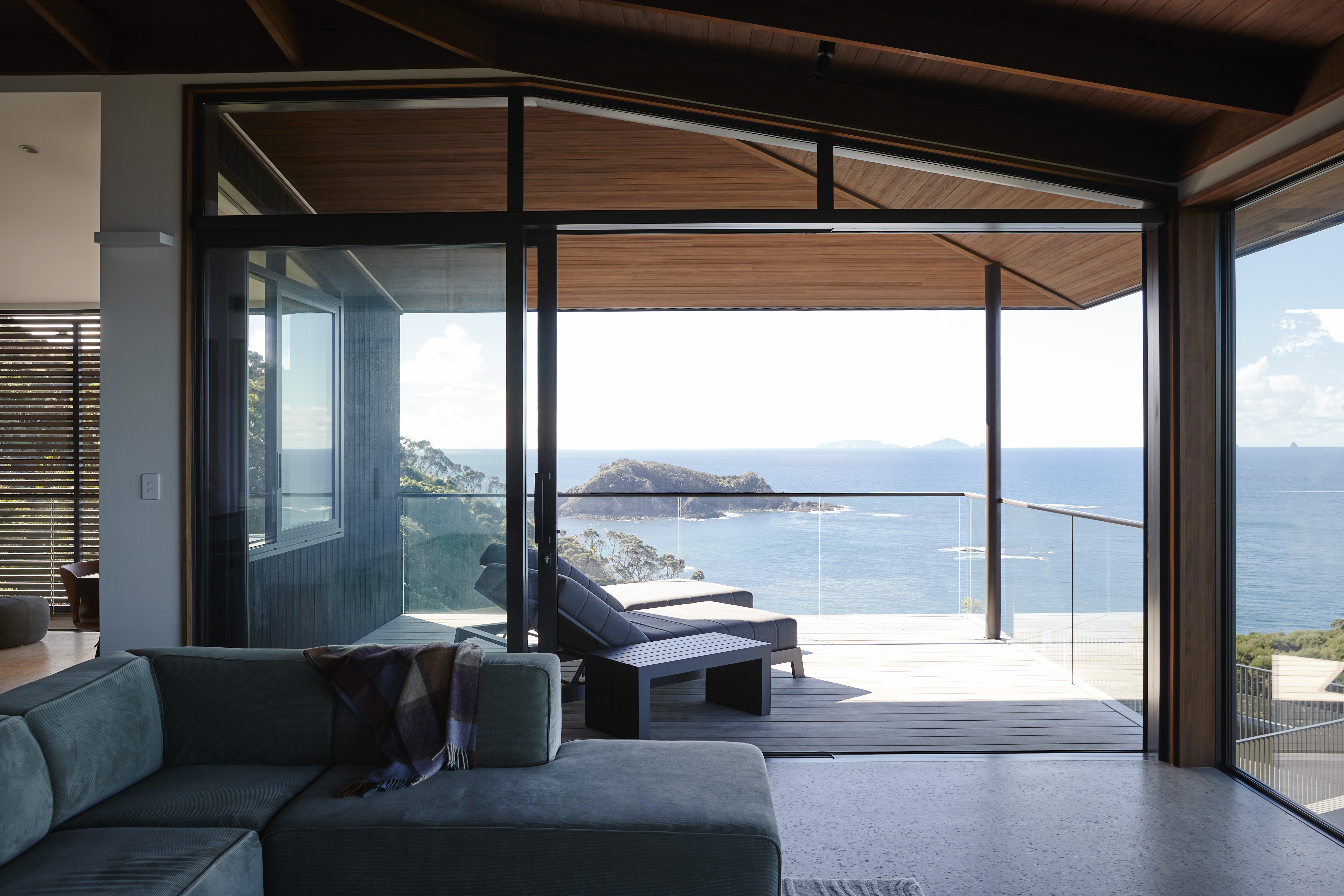
At Whau House in Tutukaka, the exposed hillside setting calls for two different outdoor experiences.
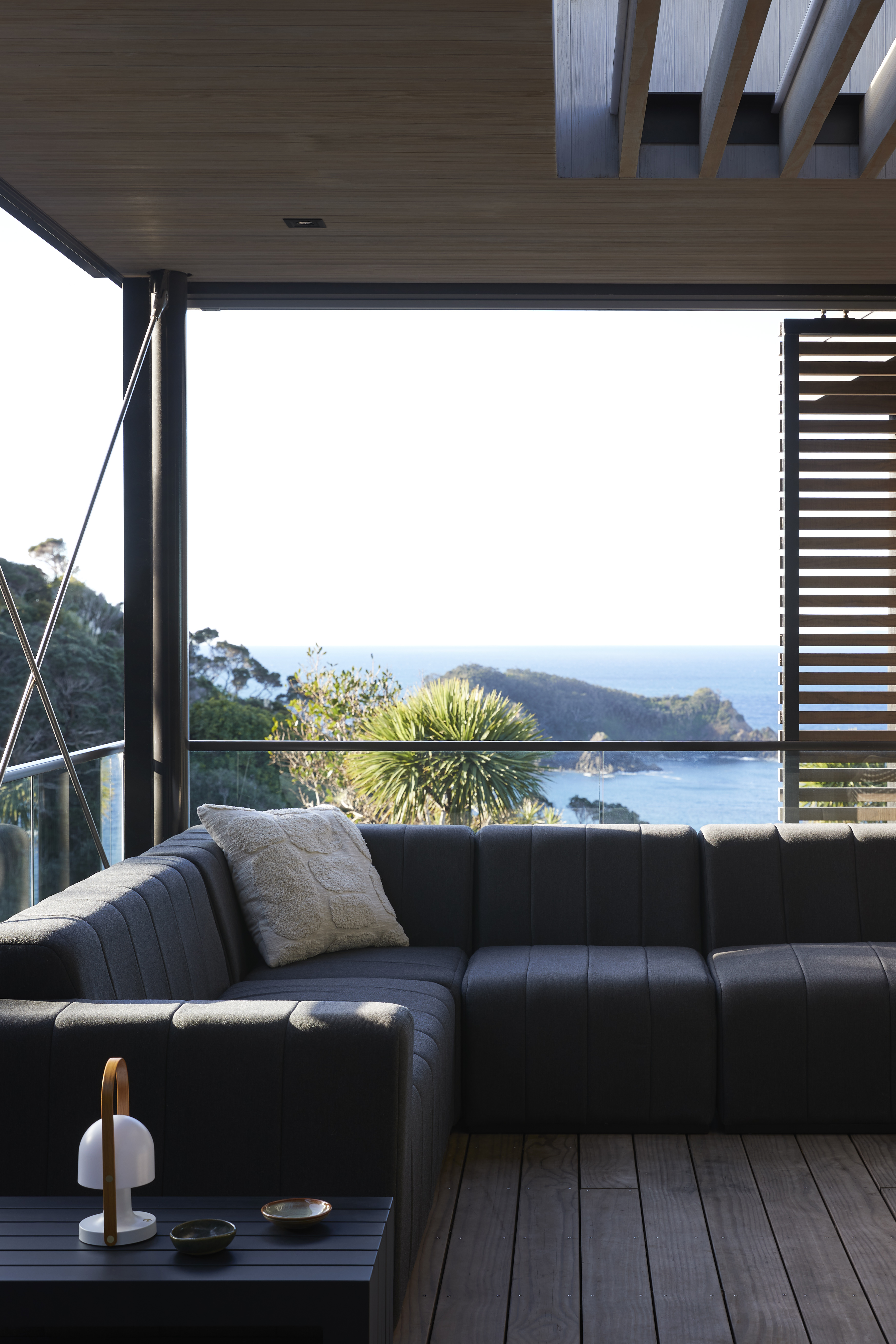
The seaward deck opens towards the coastline. A garden room tucked against the hillside offers a more protected alternative when coastal winds increase. The layout gives the family a choice about where to spend time as conditions change.
That is a useful principle to bring to a beach-house brief: identify a second place to sit outside early enough for it to shape the plan.
When the sea view and the sun are on different sides
A coastal outlook does not always face north. A site might look east across a bay, west towards the evening light or south over the water.
That does not rule out a comfortable home. It means considering how light can enter from more than one direction, and where each activity belongs. Breakfast may suit one end of a living space; a sheltered afternoon seat may belong somewhere else.
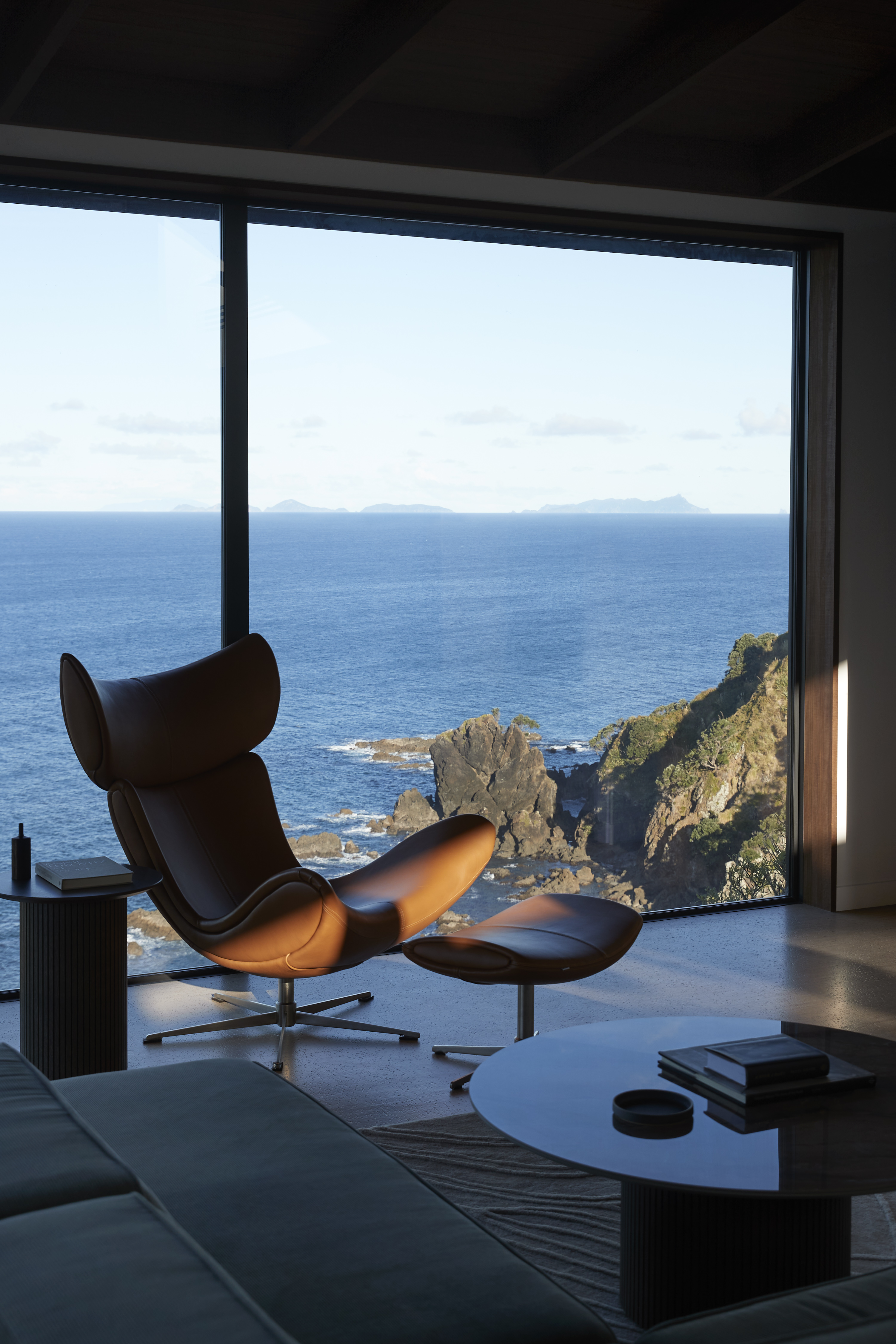
There is also value in deciding which views deserve the largest openings. A smaller window can frame a particular headland beautifully. Keeping some solid wall gives the room places for furniture, artwork and a quieter sense of enclosure.
The aim is to enjoy the outlook from a room you want to spend time in throughout the year.
Choose materials for the particular coast
Salt exposure makes material selection and detailing especially important. Roofing, cladding, flashings and fixings need to be considered together, including their compatibility and suitability for the site.
A sheltered inlet and an exposed surf coast can present different conditions. Even parts of the same house can weather differently. Areas protected from rain may retain salt deposits and need deliberate cleaning.
Maintenance belongs in the design conversation. Can you reach the surfaces that need washing? Can a worn component be replaced without dismantling the surrounding work? Are you comfortable with timber changing colour, or will you want to maintain a particular finish?
These questions help establish what living with the house will involve. They also make sustainability more tangible: choosing carefully, detailing well and looking after what has been built.
Design for ordinary beach days
A beach house has its own practical routines. Wet towels need somewhere to dry. Sandy feet need a sensible route inside. Boards, fishing gear and beach bags need a place that does not take over the living room.
For a family holiday home, think about occupancy too. Two people arriving on a winter Friday have different needs from a house full of guests in January. Rooms that can serve more than one purpose may accommodate that variation without adding unnecessary floor area.
Then consider the less visible parts of the site. Access, ground conditions, water supply and wastewater arrangements can influence the design and budget. Coastal hazards and applicable planning controls need site-specific investigation early in the process.
A home that belongs to its setting
There is room for individuality in coastal architecture. The character of the house can grow from the land, the way your family spends time together and the materials you enjoy living with.
Our writing on designing for the senses explores some of those experiences. At the beach they are particularly immediate: the sound of weather, the temperature of a shaded floor, the feeling of stepping out of the wind.
If you are considering a new beach house, we would welcome a conversation about the site, the views you love and the kind of days you want to spend there.
Share